

Introduction
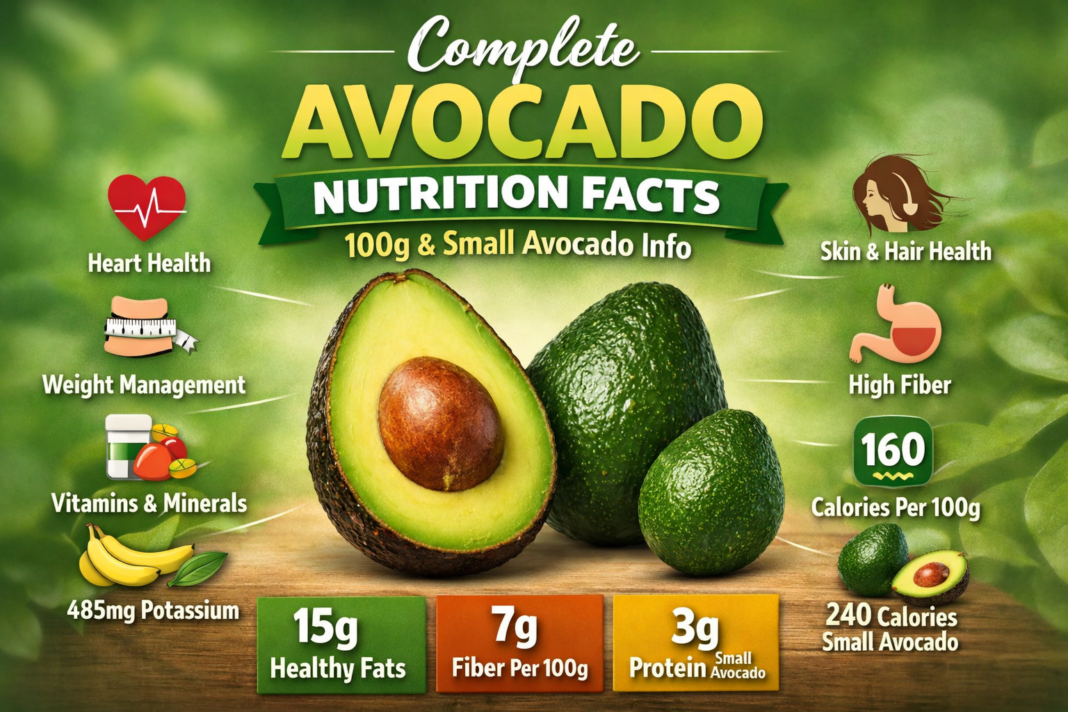
Avocados are among the most nutritious fruits available today. Loved for their creamy texture, rich flavor, and versatility, they have become a staple in health-conscious diets worldwide. Whether consumed as part of a salad, smoothie, toast, or eaten on their own, avocados provide numerous nutrients that support overall wellness. In this article, we’ll explore avocado nutrition facts, break down avocado nutrition per 100g, and examine small avocado nutrition to help you make informed dietary choices.
Complete Avocado Nutrition Facts
Avocados are rich in healthy fats, fiber, vitamins, and minerals. Unlike most fruits, they contain monounsaturated fats, which are heart-healthy and can aid in reducing bad cholesterol levels. Beyond their fat content, avocados are packed with antioxidants and micronutrients essential for overall health.
Overview of Avocado Nutrition
The term avocado nutrition refers to the broad range of nutrients found in this fruit. Some key points include:
- Healthy fats: Monounsaturated fats make up the majority of avocado fat content.
- Carbohydrates: Low in net carbs, making it suitable for low-carb and keto diets.
- Protein: Avocados provide a small but significant amount of plant-based protein.
- Fiber: High in soluble and insoluble fiber, aiding digestion and promoting satiety.
Avocado nutrition includes healthy fats, fiber, vitamins, and minerals that support heart health, digestion, and overall wellness.
Health Benefits of Avocado Nutrition
Heart Health:
Avocados are rich in monounsaturated fats, particularly oleic acid, which may reduce inflammation and promote cardiovascular health. Their potassium content also helps regulate blood pressure.
Weight Management:
Thanks to their high fiber content, avocados help you feel full longer, reducing unnecessary snacking and supporting weight management goals.
Skin and Hair Benefits:
The vitamins E and C found in avocados help maintain skin elasticity and hair strength, while antioxidants combat free radical damage.
Eye Health:
Lutein and zeaxanthin in avocados are carotenoids that support eye health and may reduce the risk of age-related macular degeneration.
“Regular consumption of avocados supports heart health, weight management, skin care, and eye health thanks to its rich nutrient profile.”
Avocado Nutrition Facts Per 100g
Understanding avocado nutrition facts 100g helps you measure your intake and adjust your diet accordingly. Below is a detailed breakdown of nutrients found in 100 grams of raw avocado.
Macronutrients in 100g of Avocado
| Nutrient | Amount per 100g |
|---|---|
| Calories | 160 kcal |
| Total Fat | 15 g |
| Saturated Fat | 2.1 g |
| Monounsaturated Fat | 10 g |
| Polyunsaturated Fat | 2 g |
| Carbohydrates | 9 g |
| Dietary Fiber | 7 g |
| Sugars | 0.7 g |
| Protein | 2 g |
Key Notes:
- Most calories come from healthy fats.
- Low in sugar compared to other fruits.
- High fiber content aids digestion.
Micronutrients in 100g of Avocado
Avocados are rich in essential vitamins and minerals:
- Vitamin K: 26% of the daily value (DV)
- Folate (B9): 20% DV, essential for DNA synthesis and repair
- Vitamin C: 17% DV, boosts immunity and collagen production
- Vitamin E: 10% DV, an antioxidant that protects cells
- Potassium: 485 mg, helps regulate blood pressure
- Magnesium: 7% DV, important for muscle and nerve function
“Avocado nutrition facts per 100g show it is rich in healthy fats, fiber, potassium, vitamins K, C, and E, supporting heart, digestive, and overall health.”
Fiber Content in 100g Avocado
A 100g serving of avocado contains around 7 grams of fiber, which includes both soluble and insoluble types:
- Soluble fiber: Helps lower cholesterol and stabilize blood sugar.
- Insoluble fiber: Promotes healthy bowel movement and gut health.
High fiber content makes avocados ideal for weight management and digestive health.
“100g of avocado provides 7g of fiber, supporting digestion, blood sugar control, and satiety.”
Small Avocado Nutrition
Not everyone eats a whole avocado at once, so understanding small avocado nutrition is helpful. A small avocado typically weighs around 150 grams, which is equivalent to about 1 cup of sliced avocado.
Nutritional Value of a Small Avocado
| Nutrient | Amount in Small Avocado (150g) |
|---|---|
| Calories | 240 kcal |
| Total Fat | 22.5 g |
| Saturated Fat | 3.1 g |
| Monounsaturated Fat | 15 g |
| Carbohydrates | 13.5 g |
| Dietary Fiber | 10.5 g |
| Sugars | 1 g |
| Protein | 3 g |
Key Points:
- A small avocado has more than double the fiber of many fruits.
- Provides nearly half the daily requirement of potassium.
- Rich in healthy fats that are beneficial for cardiovascular health.
Portion Control and Health Benefits
Eating a small avocado can fit perfectly into your daily diet:
- Breakfast: Spread on toast or add to eggs.
- Lunch: Add to salads or sandwiches.
- Snack: Blend into smoothies for a nutrient boost.
Moderation is key, as avocados are calorie-dense. Eating one small avocado per day is sufficient for most healthy adults.
“Small avocado nutrition offers 240 calories, 22.5g fat, 10.5g fiber, and essential vitamins, making it perfect for heart health and satiety.”
Tips to Incorporate Avocado into Your Diet
Adding avocados to your meals is simple and versatile:
- Avocado Toast: Spread mashed avocado on whole-grain bread, top with eggs, tomatoes, or sprouts.
- Salads: Dice or slice avocado into green salads for added creaminess and nutrition.
- Smoothies: Blend avocado with fruits like banana or berries for a creamy texture.
- Guacamole: A classic dip that also provides healthy fats and fiber.
- Soups: Add avocado to cold soups like gazpacho or chilled cucumber soup.
“Including avocado in your diet is easy—add it to toast, salads, smoothies, guacamole, or soups for healthy fats and fiber.”
Frequently Asked Questions About Avocado Nutrition
Is avocado high in fat?
Yes, avocados are high in fat, but these are mostly heart-healthy monounsaturated fats. They help reduce bad cholesterol and support overall cardiovascular health.
How much avocado should I eat daily?
One small avocado per day is generally sufficient to gain nutritional benefits without consuming excess calories.
Are avocados suitable for weight loss?
Yes. Despite being calorie-dense, avocados are rich in fiber and healthy fats, which promote satiety and can aid in weight management when eaten in moderation.
Can avocados improve skin and hair health?
Absolutely. Avocado’s vitamin E, C, and healthy fats nourish the skin, promote elasticity, and strengthen hair.
“Avocado is rich in healthy fats and fiber, suitable for heart health, weight management, and enhancing skin and hair health.”
Conclusion
Avocados are a nutrient powerhouse. Understanding avocado nutrition facts, whether per 100g or in a small avocado, helps you incorporate this superfood effectively into your diet. They provide healthy fats, fiber, potassium, and essential vitamins that support heart health, digestion, skin, and overall well-being. By including avocados in your meals regularly, you can enjoy their creamy texture and reap the benefits of this versatile fruit.
Read More:- Healthy Snacks Guide for Daily Energy, Fitness and Balanced Nutrition